
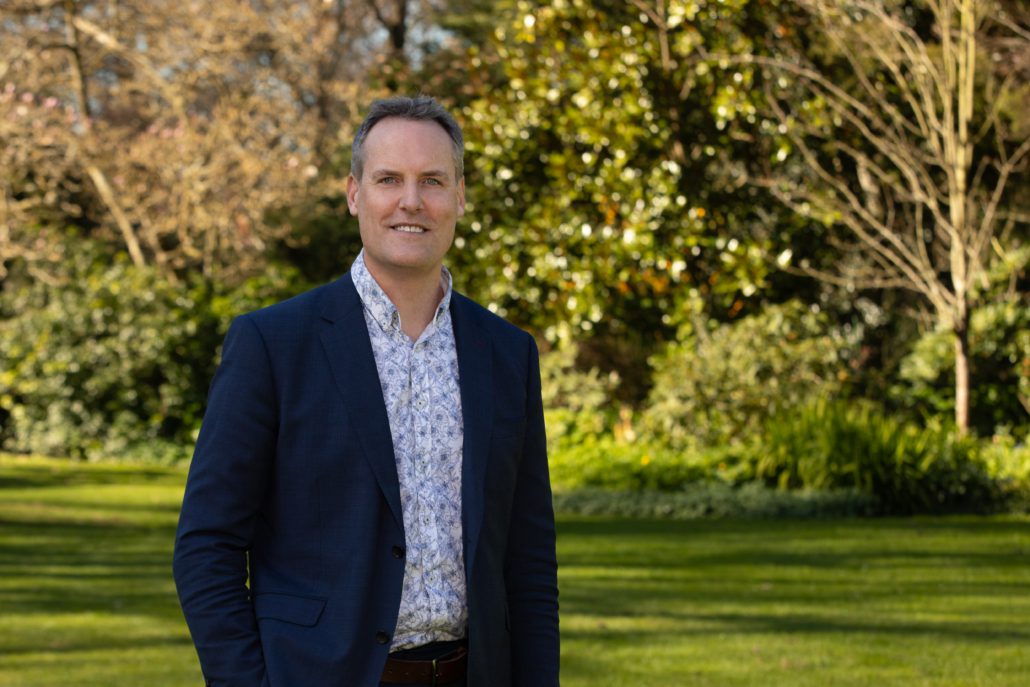
This post was written by Steven Moe, Partner at Parry Field Lawyers
I am an immigrant to New Zealand.
In this article I want to share some personal reflections on what it was like to move here and both the opportunities and challenges to be aware of.
This is relevant because in a world filled with turmoil and uncertainty, we are seeing a lot of interest in New Zealand’s revamped Active Investor Plus (AIP) visa. This is also known as AIP visa and sometimes as the ‘Golden Visa’. For more information on the AIP visa, view our Information Hub here.
Recent data shows the programme’s simplified structure means there has been a 500% surge with 573 applications and $1.05 billion already invested, with an additional $2.34 billion expected soon. It opens up a possibility to move here, that was previously harder to access. But what is it like to move to Aotearoa New Zealand? I look at that below, but first let’s outline how the AIP visa works.
What are the key points for the AIP visa?
Our Immigration team is extremely active in this area and in this article we outline all the details on how the AIP visa works. In summary, the key points are:
- There are two investment categories:
- Growth (minimum $5m) or
- Balanced (minimum $10m)
- You need to spend 21 days over three years in NZ for Growth category and 105 days over five years for Balanced.
- There are now no English language requirements.
Invest New Zealand was established less than a year ago and it exists as “an Autonomous Crown Entity dedicated to attracting and enabling high-quality foreign direct investment that supports long-term economic growth and productivity”. Resources from Invest New Zealand on this topic are here.
So, what should immigrants be aware of?
I was just eight years old when my family moved from America to New Zealand. This means I am not a typical immigrant as I did not come as an adult, and instead grew up in this culture and place.
We first arrived in a small rural town called Papakaio. When I say town, I should explain that I mean a sign and the local school where I went. Being that young means that I grew up across two cultures and, as a child, we also lived in other places such as Chile and back in California – but our family was always in love with this country and so I lived here until I was about 25 years old. I then did a 15-year ‘overseas experience’ in other parts of the world, before returning 10 years ago.

Steven with younger sister Natalie near Aoraki Mt Cook among lupins about 1984.
The positives are perhaps obvious: the scenery in Lord of the Rings is real, you can visit glaciers, lakes, mountains and the sea in one day. The contrasting seasons are a reminder of time passing and are each beautiful. There is good food and wine all produced here, the housing is cheaper than elsewhere (though expensive compared to local salaries), there are good education opportunities for children and at Universities. A lot of positives.
A few key things that it is good to go in with eyes open about:
Distance: Its just far away here and so after the initial honeymoon period of a few months or longer, you will start noticing things like “oh, we cannot just stop in for that important birthday party”, or worse, “that health diagnosis for my father is bad, I wish I was there to make a meal and sit with him”. This is when you realise that being far away from family is really hard.
Culture: You might think that because English is the main language spoken that the culture is also the same as other places, but that is not accurate. In fact, there is a lot that new immigrants need to learn about, such as the way to interact and do business. Typically this might involve listening more than speaking and my advice is to be very cautious of statements that start, “Well the way we do things back home is…”.
Friendships: It can take time to build up friendships here that go deeper than the superficial. This can be disconcerting as moving to a new country can be an unsettling time. This isn’t to say Kiwis are not friendly, it is just they want to see the measure of the person.
Māori relationships: Take time to understand the culture and you will find yourself changed. This is my own experience. It is more than saying “Kia ora”, though that is a great start. It is about realising that the intergenerational wisdom that comes from Te Ao Māori (the Māori worldview) just might affect all aspects of who we are, and how our businesses and organisations operate as well. If you’d like some books to start understanding this feel free to reach out (StevenMoe@parryfield.com) but one example is Huia come Home and I recommend the work of Tūmanako consultants here.
Connections and size: Because there are only a few million people, the entire country is the size of a medium-sized city in other places. This means that you can quickly get to know everyone and your reputation will precede you far more than in other places – this can be very good (or if you mistreat others, very bad!). It also means that unlike other places, if you go to an awards dinner or celebration you just might find that you are sitting near the Prime Minister or others in important positions and it is easier to access people who, in other places, you might have trouble meeting.
Ecosystems: Continuing the last point, it is important to engage with those involved in the same ecosystem and beyond. For me that has meant being part of the Edmund Hillary Fellowship, as well as the Institute of Directors and the XRB Advisory Panel, Charities Services sector group, etc – I view each group I am part of as being like an Island and my job is to be a bridge of connection between them.
Home, and your attitude to the move: At some point you will need to make a decision about where you want to build a home. For my wife and I, we travelled for 15 years living in Tokyo, London, and Sydney, but finally realised with young children that we wanted to put down roots in a place so the children could build a sense of identity. We wanted to be somewhere we could contribute and have relationships for when we retire. For me this also involved renouncing my US citizenship and I am happy to share what that was like and why I did that a few years ago. The point is that if you are always thinking of where you came from as ‘home’ and the new place as a place you are visiting, then it will be hard to truly integrate well.
My hope is these reflections will help if you are considering coming to Aotearoa New Zealand. From my own experience it has been positive and I think it is a great place to be based from. You will always be a global citizen if you have lived in other places but you can start to build a life here too. If you would like more personal advice, then I have a commute each day and am very happy to connect and give you thoughts or answer any questions you may have.
How We Can Help
Moving to a new country can be a challenge. Our team of 100 across five offices combines expertise in immigration, commercial, legal structuring, and property to provide comprehensive guidance tailored to your needs.
Please note that this article is not a substitute for legal advice and contains personal reflections rather than any specific legal guidance. Please feel free to contact me by email at StevenMoe@parryfield.com or by phone 021 761 292.
Seeds Podcast Episode
To hear more, listen to this recent Seeds Podcast episode where Steven speaks with Associate, Rebecca Carruthers, who is an immigration specialist at Parry Field Lawyers about tips for moving to New Zealand as well as how the Active Investor Plus visa actually works.
Additional resources
For more reading from a variety of angles on this topic of the AIP and immigration we recommend the following sources:
Invest New Zealand website: https://www.nzte.govt.nz/page/invest-or-raise-capital-with-nzte
Beehive information with Government summary of recent statistics: https://www.beehive.govt.nz/release/active-investor-plus-delivers-3-billion-investment-new-zealand
Immigration NZ summary of the Visa: https://www.immigration.govt.nz/visas/active-investor-plus-visa/
Icehouse Ventures with a guide from startups perspective: https://resources.icehouseventures.co.nz/blog/new-zealand-golden-visa-a-guide-to-the-active-investor-plus-aip-program?hs_amp=true

